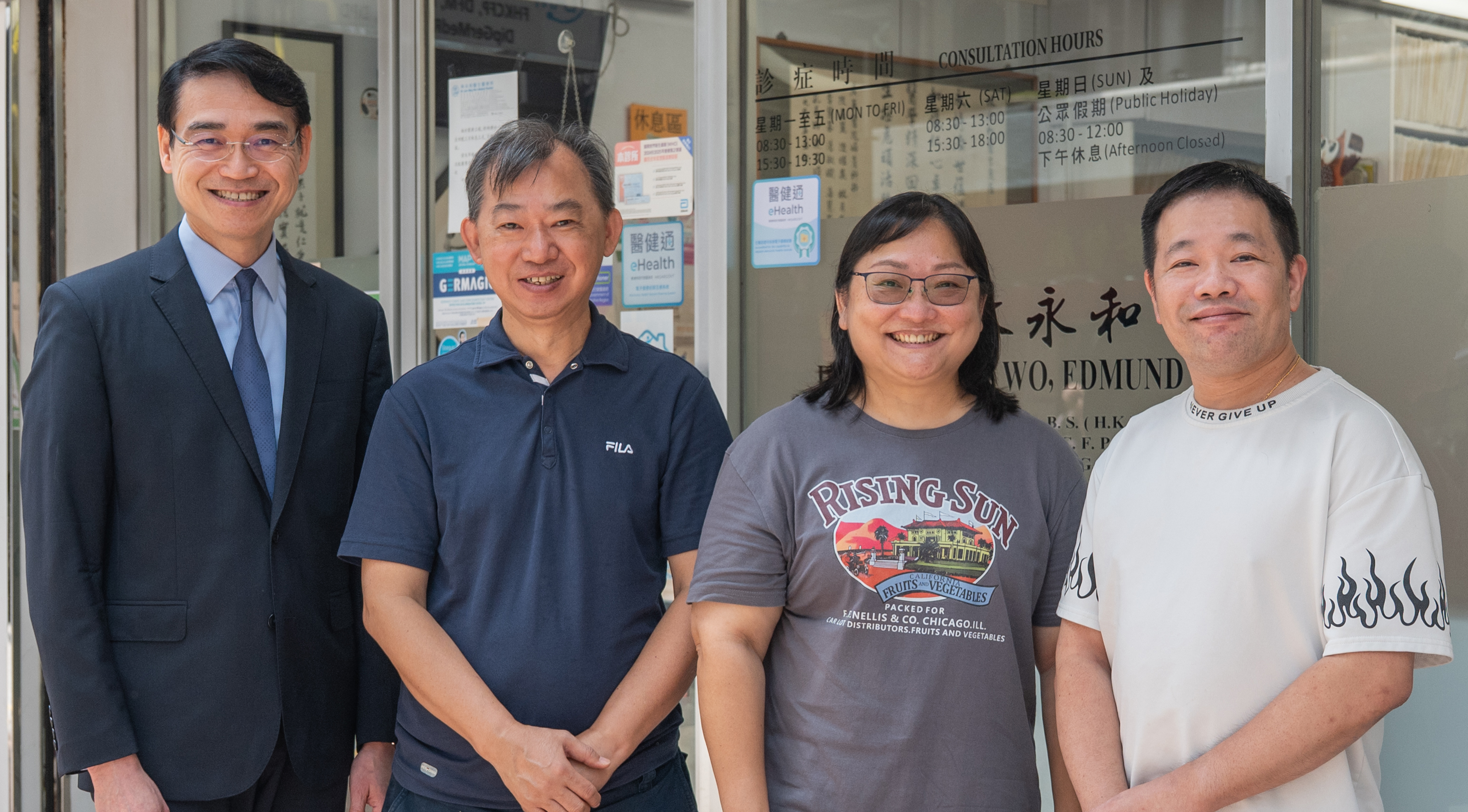
 (From left) Dr Lam Wing Wo, Mr Cheng Shun Bun, Ms Chan Sin Wah
and Mr Wong Wing Fai
(From left) Dr Lam Wing Wo, Mr Cheng Shun Bun, Ms Chan Sin Wah
and Mr Wong Wing Fai

Improve Private Doctors' Treatment Efficiency with eHealth-
The Personalised Lifelong
Electronic Health Records
(From left) Dr Lam Wing Wo, Mr Cheng Shun Bun, Ms Chan Sin Wah
and Mr Wong Wing Fai
To promote the depositing of electronic health records (eHRs) in private healthcare providers (HCPs), eHealth introduced two new initiatives in October 2025: the eHealth+ Connectivity Support Scheme (the Support Scheme) and the eHealth+ Connectivity Accreditation Scheme (the Accreditation Scheme). Together, these programmes empower HCPs to integrate with eHealth, enabling patients to build comprehensive, lifelong health records for more coordinated care.
 The Support Scheme aims to facilitate a private HCPs in adopting electronic medical record systems (EMRS) that are connected to eHealth for depositing eHRs of patients with authorisation.
 The Accreditation Scheme recognises (HCPs) that have met technical standards to deposit electronic health records (eHRs) into citizens’ personal eHealth accounts. (Currently, the Accreditation Scheme applies only to western medical practitioners, medical laboratory centres, and radiology diagnostic centres) Citizens can easily choose suitable HCPs by their accreditation marks and ensure their medical records are deposited in their personal eHealth accounts.
Connecting with eHealth:
Supporting Private Doctors in Streamlining Patient Care
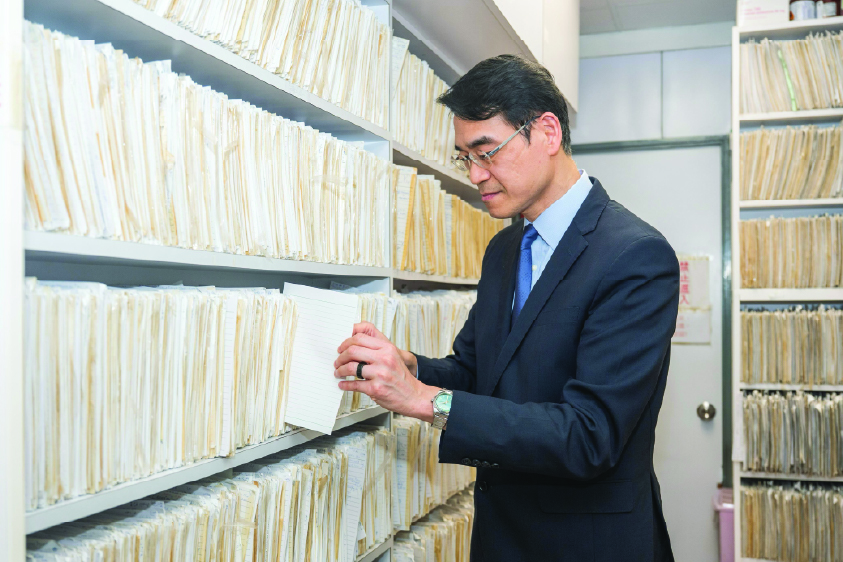
Dr Lam Wing Wo, a private practitioner with over 30 years of experience, compares running a community clinic to managing a bustling "Cha Chaan Teng" (Hong Kong-style café), where doctors assume the role of multi-skilled chefs - executing tasks such as diagnoses, medication prescriptions and patient history documentation within tight timeframes. "Since opening my clinic in 1993, we've stored over 100 000 paper medical records. By digitising them in 2017, this not only saved space, but also improved data security, and gave me instant access to patient histories through our clinical management system," Dr Lam shares.
Currently, private HCPs participating Public-Private Partnership programmes are required to deposit certain medical records to eHealth. The government plans to extend this requirement to all government-funded health programmes. For Dr Lam, who works in a "hot kitchen" practice environment, joining and connecting eHealth was not just about meeting requirements for the Chronic Disease Co-Care (CDCC) Pilot Scheme. More importantly, with patient consent, it allows him to access comprehensive patient health records from both public and private sectors, and enable him to deposit records that benefit other doctors and improve diagnostic accuracy and treatment efficiency.
"An increasing number of patients with chronic conditions seek care from both public and private healthcare providers, especially the elderly who find it difficult to accurately recall their medical histories and medications. With patient consent, we can now access full medical history through eHealth, adjust treatments precisely, avoid medication conflicts and reducing medical risks." Dr Lam explains.
Statistics indicate that Hong Kong had 2.2 million chronic disease patients in 2021 1, a number expected to rise to 3 million by 2039. Dr Lam notes that many patients suffer from multiple chronic conditions simultaneously, necessitating complex medication schedules and regular health monitoring through various tests. eHealth consolidates health records while allowing doctors to access laboratory reports, helping to avoid redundant tests. This improves clinical efficiency and facilitates more seamless and comprehensive healthcare delivery. Beyond integrating records, eHealth helps doctors identify health risks and encourages the sharing of health information and collaboration, thereby improving the overall quality of healthcare.
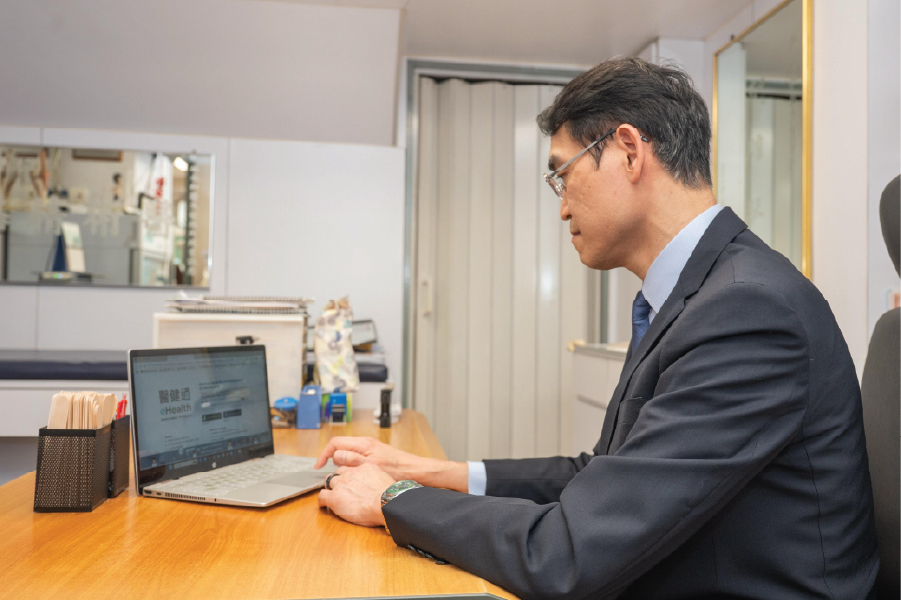
"Using eHealth, I can instantly access and thoroughly review crucial patient information including diagnostic records, medication history, allergic reactions and laboratory reports. Having this comprehensive view allows me to better evaluate patients' responses to medication and extract valuable insights from test results, greatly improving care quality for both new and chronic cases. For example, when a patient's recent blood test showed a slight drop in haemoglobin, I quickly reviewed this past records on eHealth to analyse the trend and decide if further treatment is needed. Recently, I avoided repeating a thyroid test because eHealth showed it had already been conducted in the last three months. This saves time, reduces costs, and minimises patient burden."
eHealth+ Connectivity Accreditation Scheme:
Turning "Health Records That Follow the Patient" into
Reality
With 30 years of community service, Dr Lam humbly states there is no "secret recipe" but stresses the profound responsibility of doctors. "eHealth allows doctors to access patients' comprehensive health records, greatly enhancing diagnostic efficiency and accuracy. That's why it is crucial to proactively deposit patient records to eHealth, ensuring other doctors have full clinical records and the patients' rights are protected for informed medical decisions."
To assist the public, eHealth launched the Accreditation Scheme in October 2025, recognises HCPs
that have met technical standards to deposit eHRs into citizens' personal eHealth accounts.
Based on different levels of accreditations marks and the special accreditation marks, citizens
can select suitable HCPs. Citizens can also use the "Doctor Search"  function on the eHealth App or website to check the accreditation status and eHRs deposit
capabilities of individual HCPs. At the same time, citizens can also scan the eHealth QR code
displayed by the HCPs using the App to view the types of eHRs that the HCP is capable of
depositing and immediately give sharing consent to HCP. (Currently, the accreditation scheme
applies only western medical practitioners, medical laboratory centres, and radiology diagnostic centres.)
function on the eHealth App or website to check the accreditation status and eHRs deposit
capabilities of individual HCPs. At the same time, citizens can also scan the eHealth QR code
displayed by the HCPs using the App to view the types of eHRs that the HCP is capable of
depositing and immediately give sharing consent to HCP. (Currently, the accreditation scheme
applies only western medical practitioners, medical laboratory centres, and radiology diagnostic centres.)
eHealth+ Connectivity Accreditation Scheme
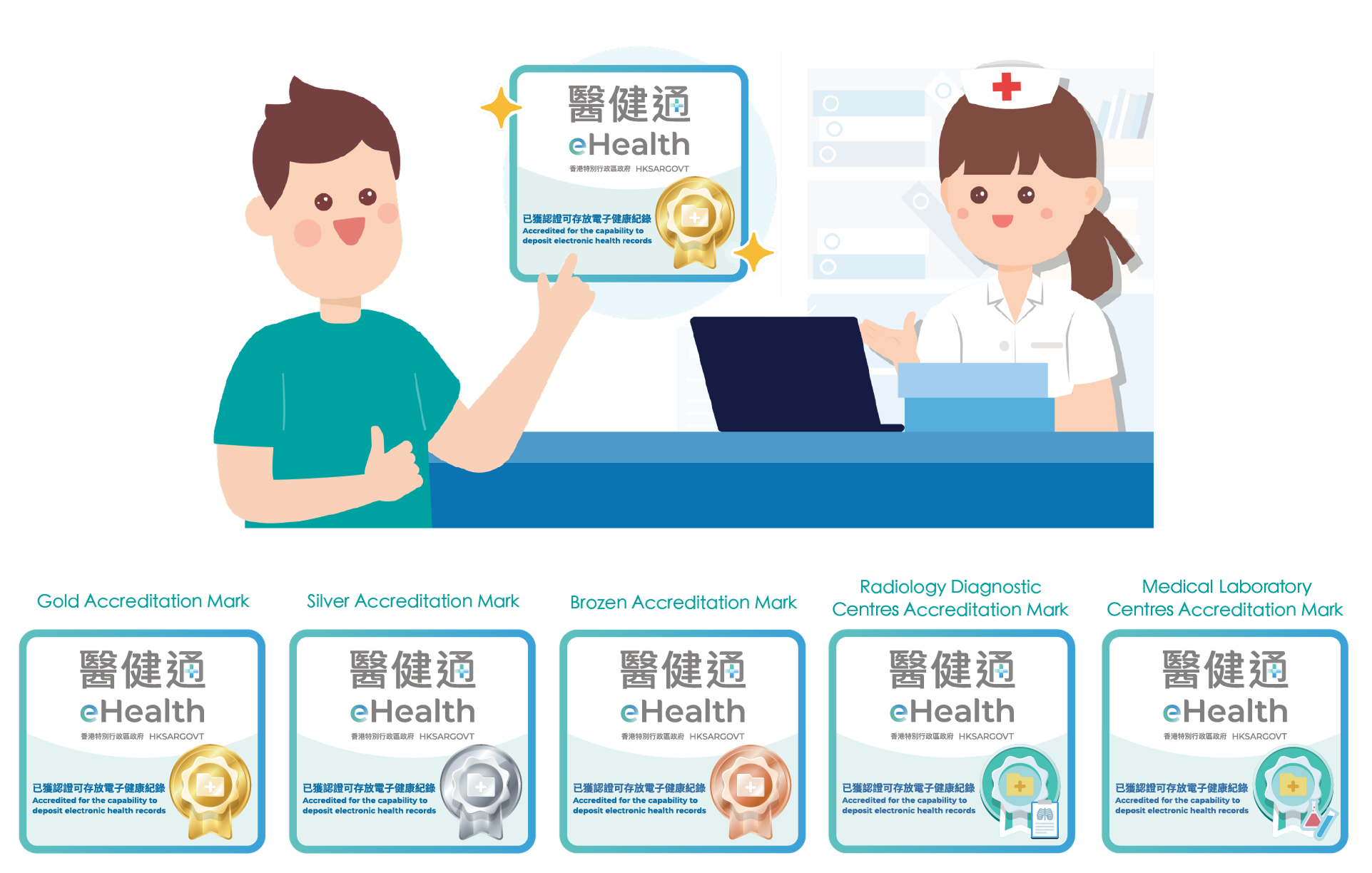
As of October 2025, five eMR systems are fully compatible with eHealth. Private HCPs adopting these systems and applying for the Support Scheme before 31 March 2026, will receive subsidy and the accreditation mark. For application details, please visit this link.
Mr Wong Wing Fai, a patient of Dr Lam and participant of the CDCC Pilot Scheme, was diagnosed with diabetes through screening and subsequently sought treatment from Dr Lam, a participating doctor of the scheme. Mr Wong routinely monitors his blood pressure and blood glucose using the eHealth App and attends follow-up consultations every three months.
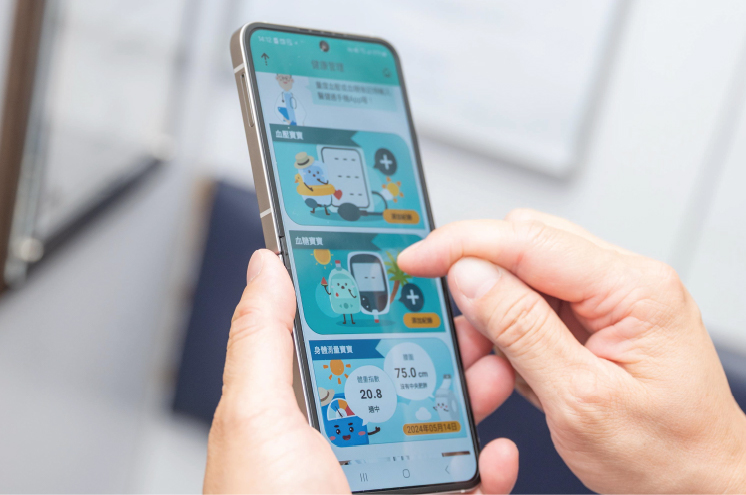

"During my check-ups, I simply show my eHealth App to Dr Lam allowing him immediate access to my daily health metrics. He can also directly review my biannual blood test results from laboratories through eHealth, interpret the findings during consultations and adjust treatment based on the latest data. As a doctor in an accredited HCP under the Accreditation Scheme, Dr Lam also capable to deposit my health records to eHealth, streamlining my care when I visit other public or private HCPs," Mr Wong explained.
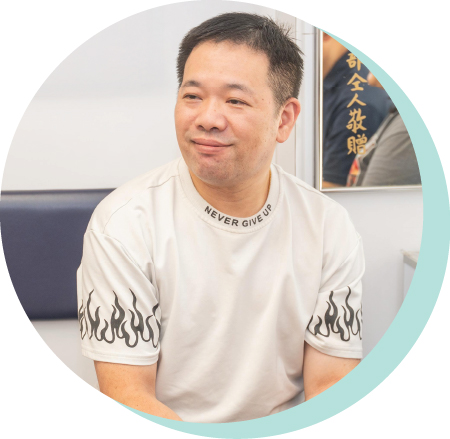
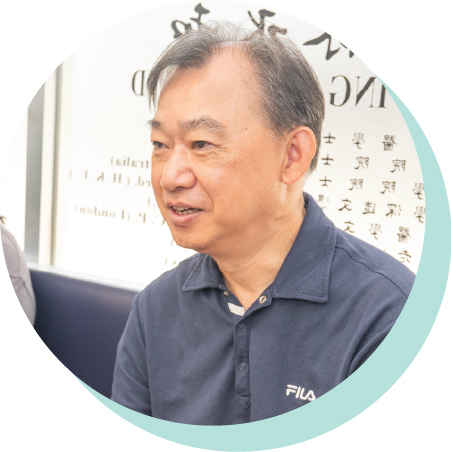

Another patient, Mr Cheng Shun Bun, is a strong advocate of health record sharing. "Whenever I need medical care now, I look for the accreditation mark at the healthcare provider. It assures me that the provider can both access and deposit my health records to my eHealth account, so other authorised healthcare providers can access my records with my sharing consent," he said.

The Accreditation Scheme empowers patients to identify healthcare providers capable of
depositing eHRs to their eHealth account. This enables patients to build comprehensive
lifelong health record and gain better understanding their medical conditions while
simultaneously easing burdens on caregivers.
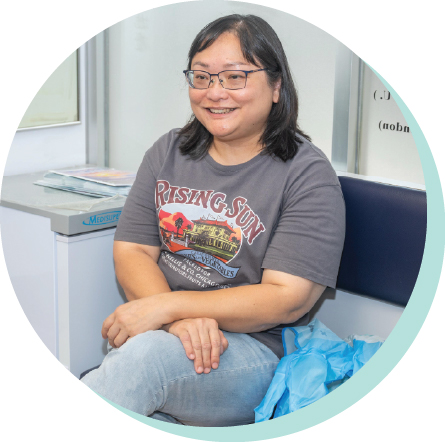
Ms Chan Sin Wah, both a chronic disease patient and caregiver for her father, shared her
experience. "My father suffered a stroke eight years ago and has required long-term care
and frequent medical visits. However, private doctors often prescribed multiple
medications without consistently depositing records to eHealth, making it difficult to
track his complete medication list and dosages. I once tried photographing his
prescriptions myself, but occasional missed updates created gaps in the information.
Even after adding him to 'My Family' through the eHealth App, I still couldn't access
prescription records from some private doctors."
Ms Chan believes the Accreditation Scheme will assist her in selecting doctors who are
capable of depositing patients' health records to eHealth, alleviating concerns about
incomplete medication histories and easing her caregiving responsibilities.
Dr Lam added with a smile. "I firmly believe this Accreditation Scheme will enhance healthcare professionals' credibility while addressing a critical issue - when primary doctors take leave or retire, patients often experience treatment disruptions due to inaccessible records. This truly makes the ideal of 'health records following the patient' a reality."
Building Comprehensive Health Records to Foster Stronger Doctor-Patient Trust
Patient Ms Chan expressed her hopes. "I look forward to more healthcare providers are accredited to achieve seamless cross-institutional health data sharing." Meanwhile, Dr Lam shared forward-looking, technology-driven vision. "The eHealth-compatible eMRS could integrate voice recognition to automatically document consultations, with AI generating diagnostic summaries – significantly reducing paperwork and allowing doctors to focus on clinical care."
Footnote
1《THE HEALTHCARE CHALLENGES IN HONG KONG》:https://www.primaryhealthcare.gov.hk/bp/en/blueprint-2/
to effortlessly manage the health of you and your family!